
BRATISLAVA AIRPORT: FROM RECOVERY TO REGIONAL HUB
Exclusive Strategic Interview with CEO Dušan Novota on Record Growth, Operational Scale, and EU Infrastructure Ambitions

Interview Date: December 2025
Interviewee: Dušan Novota, CEO and Chairman of the Board, M. R. Štefánik Airport Bratislava (BTS)
Format: Written Response Interview
—
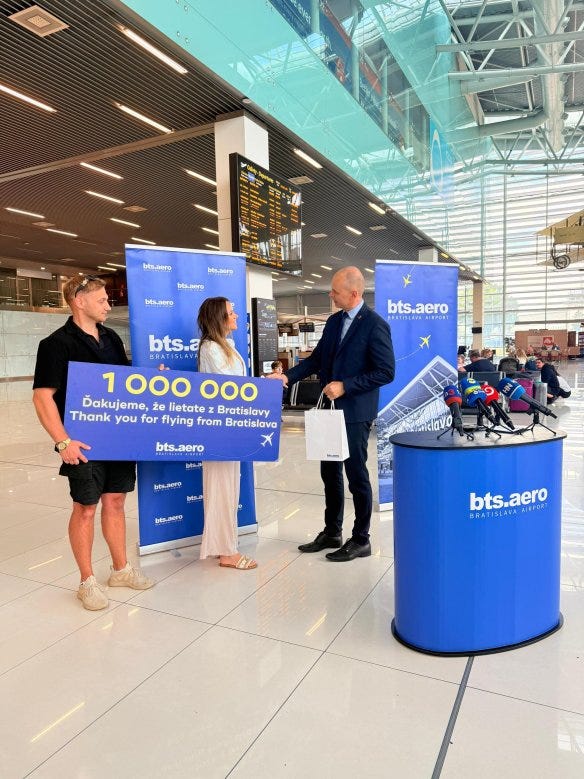
Bratislava Airport (BTS) has reached a critical threshold in its institutional development. After 16 consecutive years of financial losses, the airport posted a €2.499 million profit in 2024—a watershed moment that signals a transition from recovery toward potential structural advantage in Central European aviation.
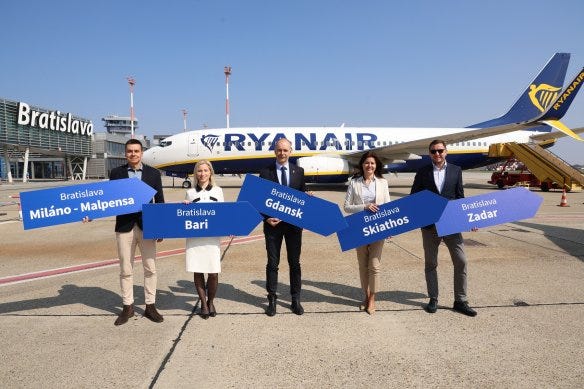
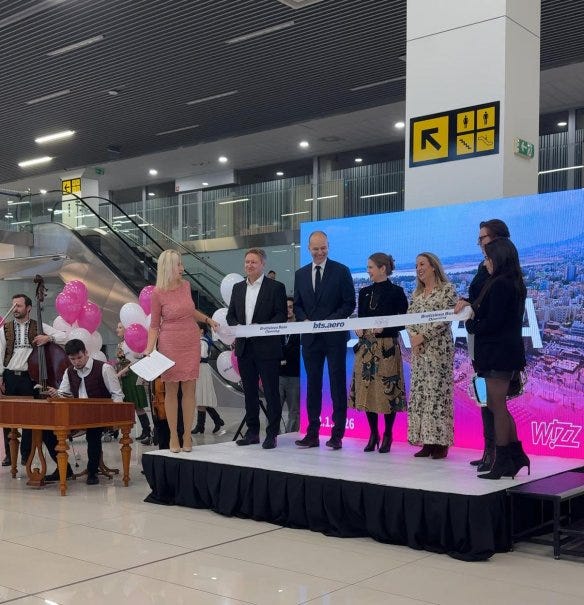
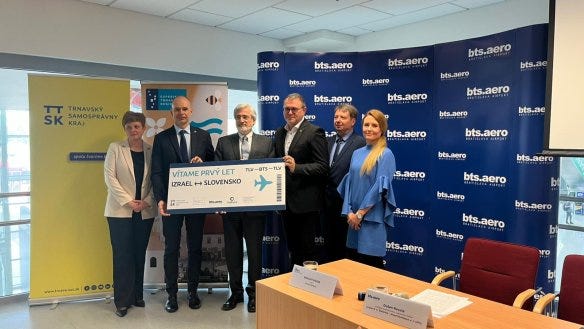
This profit arrived amid unprecedented growth: passenger traffic surged to 2.4 million in 2024, the highest since 2019, driven by transformative partnerships with two major low-cost carriers (Ryanair and Wizz Air) simultaneously expanding their Central European operations. Ryanair now operates 33 routes from Bratislava with a three-aircraft base; Wizz Air launched its four-aircraft base in November 2025, immediately scaling from two routes to 29 scheduled services.
More provocatively, BTS is positioned at the convergence of three structural trends that will shape European aviation infrastructure for the next decade:
Low-Cost Carrier Consolidation.
The dual-carrier model at BTS—with Ryanair and Wizz Air simultaneously expanding rather than competing for exclusive dominance—represents a rare configuration among regional European airports. This creates network density (62 combined routes), capacity redundancy, and competitive pricing for passengers, but also operational concentration risk rarely discussed in mainstream aviation media.
Regional Hub Transformation.
With 33 + 29 = 62 international routes, BTS is transitioning from a “secondary airport” to a genuine “regional distribution node” for Central Europe. However, this transformation is happening within a single 2012-era terminal designed for 5 million passengers annually—infrastructure that is sufficient in capacity but increasingly constrained operationally.
EU Infrastructure Pivot.
The European Union’s post-2027 Connecting Europe Facility (CEF) framework, with allocations doubled or tripled compared to 2014–2020, creates unprecedented co-financing opportunities for airports in geopolitical “bridge” locations like Slovakia. BTS’s leadership has begun positioning for these resources, particularly through the new military mobility funding envelope—a sophisticated strategic move that many peer airports have yet to recognize.
Against this backdrop, Aviaedge conducted this exclusive strategic interview with CEO Dušan Novota to explore how BTS leadership plans to navigate record passenger growth (projections exceed 4 million annually), maintain operational quality amid infrastructure constraints, secure EU funding for critical expansions, and position Slovakia’s premier airport for the next decade of Central European integration.
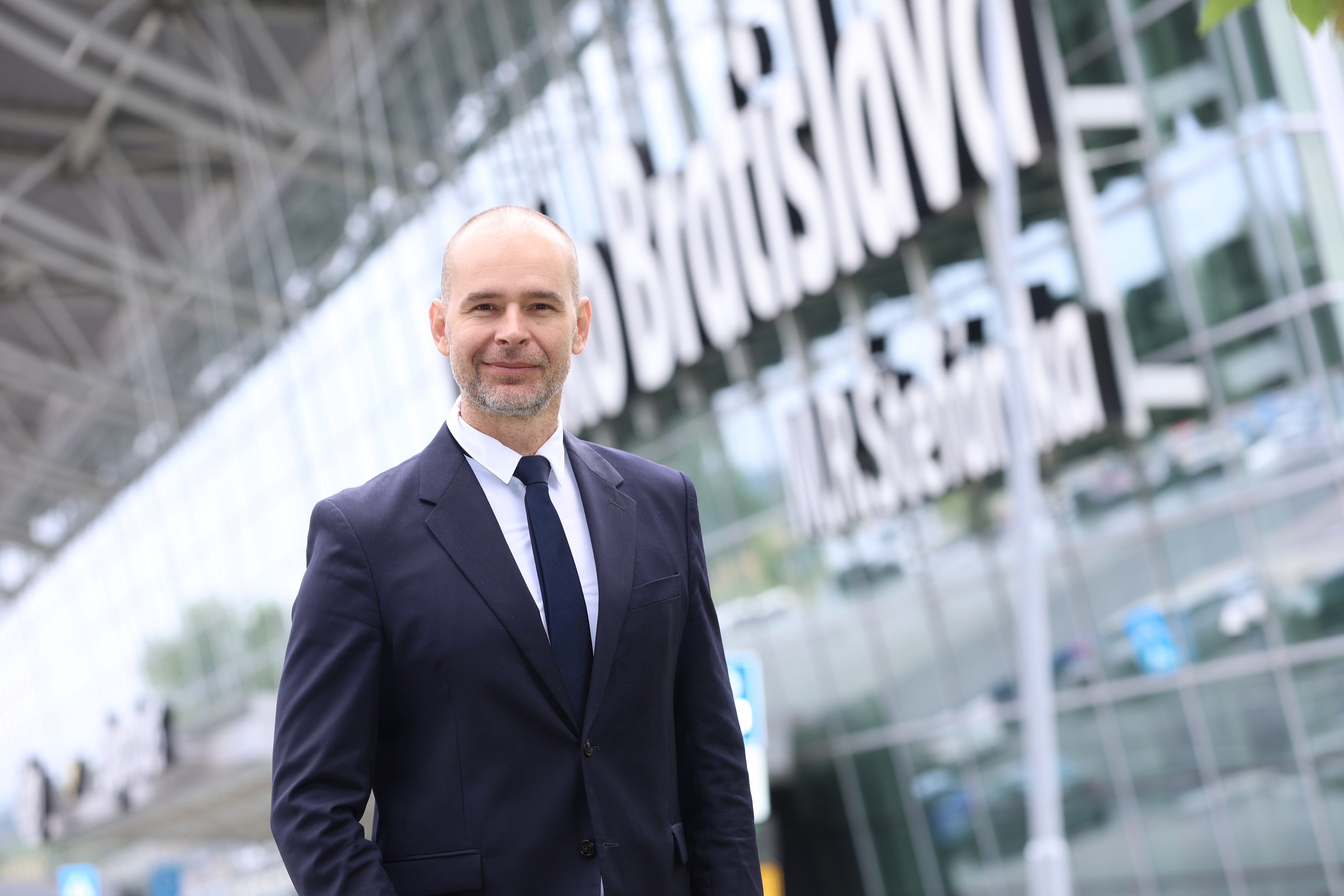
The insights below—many addressed here for the first time in strategic depth—reveal professional airport management executing disciplined growth strategy amid structural opportunity. They also reveal vulnerabilities, gaps, and concentration risks that warrant attention from investors, policymakers, and peer airport operators across Ukraine, Poland, Czechia, and the Balkans.
Q1: BALANCING RAPID GROWTH WITH OPERATIONAL INTEGRITY AND INFRASTRUCTURE CAPACITY
With BTS surpassing 2 million passengers for the first time since 2019, and both Ryanair (33 routes, record summer 2026 schedule) and Wizz Air (4-aircraft base with 29 routes) expanding simultaneously, what are your top three strategic priorities for 2026–2027, and how do you plan to balance rapid growth with operational quality and infrastructure capacity?
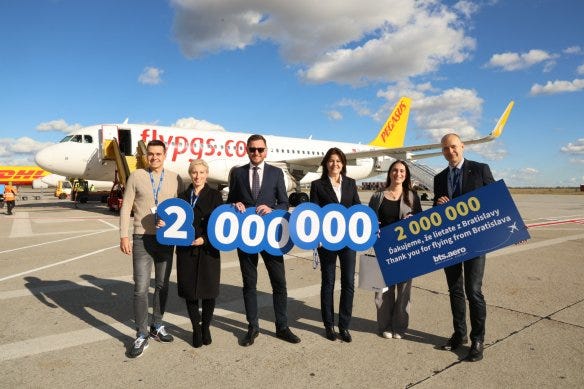
“This year, Bratislava Airport has reached a remarkable historic milestone and experienced unprecedented growth. Our strengthened cooperation with Ryanair has enabled the launch of numerous new routes, and the carrier has added a third aircraft to its Bratislava base, significantly expanding its network. At the same time, we have secured substantial growth with Wizz Air, which opened its base at Bratislava in mid-November. As a result, the carrier will increase its offering from just two routes to as many as 29 scheduled services operated by four based aircraft. Thanks to this expansion, we will already achieve an all-time passenger record this year—approximately 2.4 million passengers—surpassing our previous peak from 2019.” said by Dušan Novota.
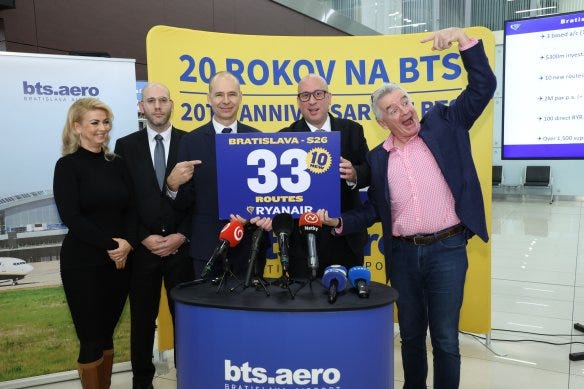
Dual-carrier consolidation (Ryanair 33 + Wizz 29 routes = 62 total) creates rare CEE network density. The 2.4M PAX in 2024 versus the 2019 peak demonstrates sustained post-COVID recovery.
“Looking ahead, driven by the growth of Ryanair and Wizz Air, our existing airline partners, as well as strong charter operations from tour operators, we anticipate exceptional further growth, with projections exceeding 4 million passengers annually.
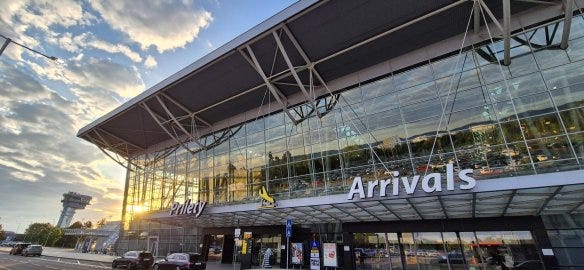
The M. R. Štefánik Airport infrastructure, reconstructed between 2010 and 2012, was designed to handle up to 5 million passengers per year, so our capacity is sufficient. However, several operational adjustments are necessary to accommodate this pace of growth. These include strengthening security screening capacity, recruiting additional staff, acquiring new ground handling equipment, and expanding parking facilities. We are preparing thoroughly from an operational perspective to ensure that we can manage this rapid growth while maintaining high service quality.” said by Dušan Novota.
A 25% capacity headroom (5M design vs 4M target) provides a structural advantage compared to KRK/PRG constraints. Process optimization reflects operational maturity. Note that this headroom applies to annual throughput, not peak-hour elasticity, where security, non-Schengen processing, and apron resources remain the main constraints.
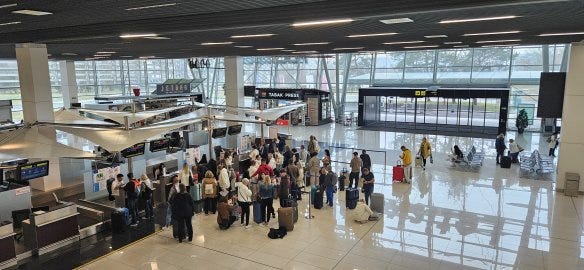
“In addition to maintaining high operational standards and a strong level of customer service, our focus remains on sustainable growth. One of our key strategic priorities, alongside those already mentioned, is to strengthen Bratislava’s connectivity with major European hubs and, through them, to improve indirect connections to overseas destinations, while also further developing mid-haul and long-haul connections.” said by Dušan Novota.
The hub feeder strategy (MUC/FRA/LHR) positions BTS as a sophisticated CEE distribution node rather than a competing long-haul hub.
Q2: CARGO GROWTH AND THE CARGO TERMINAL INVESTMENT DECISION
Q1 2025 saw cargo surging 65% year-on-year, with automotive and time-critical logistics driving growth via partnerships with DHL, MNG Airlines, and BBN Airlines Türkiye. What is your five-year vision for BTS as a cargo and logistics hub, and how does this complement the passenger growth strategy?
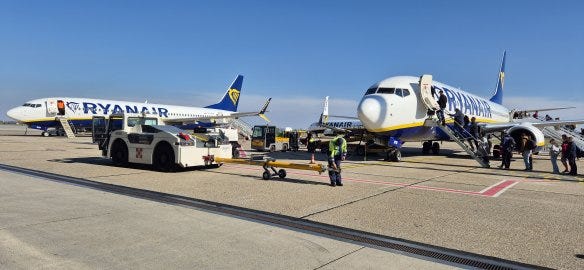
“Approximately 95% of all cargo handled in Bratislava is transported by European Air Transport, which operates DHL flights. The carrier runs cargo services once or twice daily on weekdays between Leipzig, Germany, and Bratislava, and back. Other operators perform only smaller ad hoc cargo flights, usually transporting components for automotive manufacturers in Slovakia.” said by Dušan Novota.
DHL bilateral efficiency drives growth, but a structural ceiling exists without dedicated infrastructure. The VW/PSA/JLR automotive cluster creates a defensible niche
“The growth in our cargo volumes is therefore mainly driven by DHL and the larger aircraft types they operate, although we are also seeing an increase in the transport of other goods. We are well aware that the development of cargo operations in Bratislava would be significantly strengthened by the construction of a dedicated cargo terminal. Until such a facility is built, cargo services at the airport cannot grow in a more substantial way.” said by Dušan Novota.
Clear CAPEX recognition: a dedicated cargo terminal would materially expand addressable logistics volumes, based on comparable CEE cargo airport benchmarks. CEF Transport/Military Mobility funding is a perfect fit for this NATO-flank location.
Q3: PROFITABILITY AMID SCALE — THE FINANCIAL TURNAROUND
BTS reported EUR 2.499 million profit in 2024—the first in 16 years—with energy costs cut 35% and operating costs down 5%. What were the key operational and investment decisions that drove this turnaround, and how will you maintain profitability amid infrastructure investments needed for 3–4 million passengers in 2026?
“This was an outstanding financial result, especially considering that in previous years BTS ended in a loss, mainly due to high operating costs (energy, personnel expenses, depreciation) and interest payments. Our aviation revenues increased in 2024 as a result of the rising number of passengers handled. The airport also recorded higher income from ground handling services, driven by the handling of heavier aircraft—particularly those in category E.
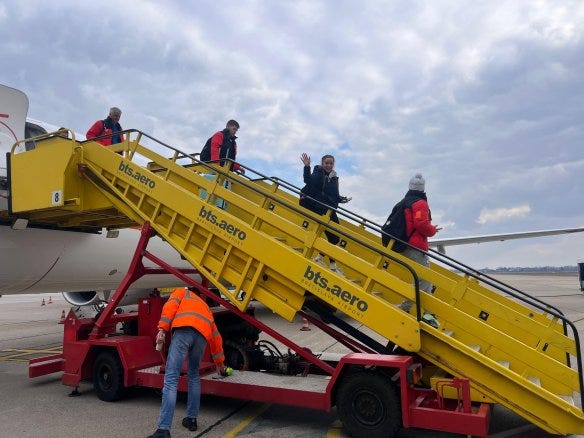
At the same time, revenues from non-aviation activities also grew, including space rentals and higher income from operating parking lot P3, achieved without raising parking fees. In addition, the airport managed to reduce energy costs by 35% and cut operating expenses by 5%, despite most of these being fixed costs.” said by Dušan Novota.
A €1.04/PAX margin (2024) suggests potential €4–5M profitability at 4M PAX, assuming fixed-cost discipline and stable airline yield structures. Fixed-cost leverage combined with yield discipline supports a sustainable regional model.
“As for major investments, one of our priorities is to procure at least one passenger boarding bridge during 2026.” said by Dušan Novota.
PBB CAPEX accelerates airline utilization (20–25 min turnarounds), driving volume and revenue compounding.
Q4: DOMESTIC CONNECTIVITY — BRATISLAVA–KOŠICE AS A PUBLIC SERVICE MODEL
The November 2025 launch of the Bratislava–Košice domestic route marks the first scheduled link in six years. How does BTS view its role in connecting Slovakia’s secondary cities, and what regulatory or commercial barriers have historically limited domestic aviation?
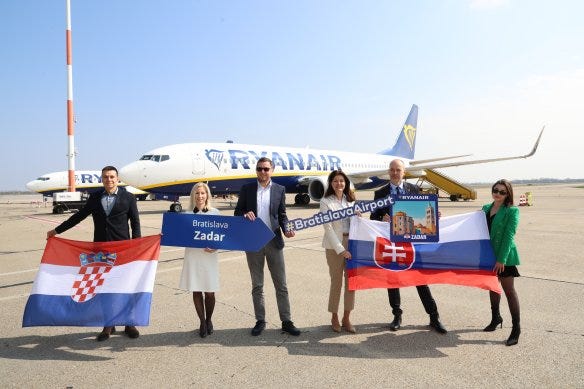
“This air service is the result of the work of the Ministry of Transport of the Slovak Republic, which launched a Public Service Obligation tender to select the operator and negotiated the operating conditions of this route with the European Commission. We are very pleased that Wizz Air is operating this domestic connection, as it has proven to be an excellent step for improving Slovakia’s connectivity. There is strong demand for flights between Bratislava and Košice, which operate up to nine times per week and we expect this route to continue beyond the PSO period. This air route speeds up many business trips, makes short getaways possible, and is undoubtedly a major benefit.” said by Dušan Novota.
Early load factors indicate demand sustainability beyond the PSO period. The ministry-airport-airline coordination model could be replicated in other CEE markets.
“Besides the recently launched domestic route between Bratislava and Košice, which we believe has the potential to be sustainable, there is limited commercial potential for additional domestic air connections. This is mainly due to Slovakia’s geographic conditions and short travel distances, as domestic air travel is not a common habit among Slovak passengers, who traditionally rely on other modes of transport. Nevertheless, we will continue to monitor the situation, and should opportunities arise, we will actively engage with carriers to ensure these are considered.” said by Dušan Novota.” said by Dušan Novota.
Geographic realism ensures credible positioning versus aspirational domestic network claims prevalent in smaller CEE markets.
Q5: SUSTAINABLE AVIATION FUEL (SAF) AND ENVIRONMENTAL LEADERSHIP
Slovakia’s Slovnaft refinery produces SAF, and the EU’s ReFuelEU Aviation regulation mandates 2% SAF blending from 2025 (rising to 70% by 2050). Is BTS working with airlines to ensure SAF infrastructure readiness, and what sustainability certifications or carbon-neutrality targets is the airport pursuing?
“In 2025, Bratislava Airport has already met the mandatory 2% SAF requirement. However, Bratislava Airport does not work directly with airlines to achieve this target. We have a contract with the fueling company Slovnaft, which monitors the relevant European regulations and ensures aircraft fueling for the airlines.
Moreover, we are taking several smaller steps that also contribute to protecting the environment. We strive to use electric vehicles on the apron, we have replaced our lighting systems with energy-efficient LED technology, and we are actively working on various ESG initiatives.” said by Dušan Novota.” said by Dušan Novota.
ReFuelEU compliance, enabled by local ISCC-certified SAF production, positions BTS in alignment with EU sustainability mandates.
Q6: TERMINAL CAPACITY, INFRASTRUCTURE MODERNIZATION, AND EXPANSION TIMELINE
BTS operates from a single terminal with infrastructure last modernized in 2012. With Wizz Air adding two more aircraft and Ryanair expanding, how confident are you that current facilities will meet 3–4 million passenger demand without terminal expansion, and what are the timeline and funding mechanisms for any planned upgrades?
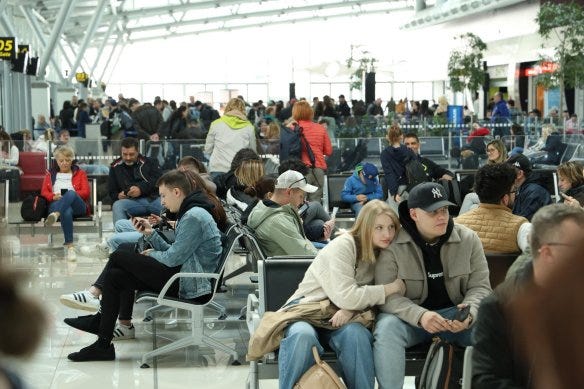
“The M. R. Štefánik Airport infrastructure, reconstructed between 2010 and 2012, was designed to handle up to 5 million passengers per year, so our capacity is sufficient. As the majority of passengers depart from and arrive to non-Schengen countries, we would like to improve the areas of the terminal designated for handling these travellers. We plan to expand the seating areas as well as the shopping options in this part of the airport.” said by Dušan Novota.
Annual utilization of 48–80% (2.4–4M PAX) remains within design parameters, though peak-hour comfort depends on targeted operational upgrades rather than terminal expansion. Non-Schengen landside areas target the highest dwell/ANC segments.
https://www.routesonline.com/airports/5277/bratislava-international-airport/news/299664562/bts-airport-reports-its-best-financial-results-in-16-years/
“However, any major changes require a longer time to implement.” said by Dušan Novota.” said by Dušan Novota.
CEF 2028–34 timing alignment defers greenfield expansion to the 2030+ horizon.
Q7: COMMERCIAL REVENUE DIVERSIFICATION — RETAIL, F&B, AND CONCESSIONS
While duty-free and retail space exist, they are underutilized. Beyond parking lot operations (P3), what opportunities exist to develop retail, F&B, lounges, or commercial concessions to enhance per-passenger revenue and reduce airport fee dependency?
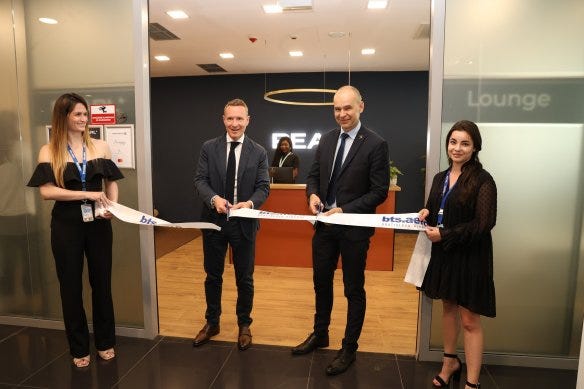
“With the growth in passenger traffic, we are also seeing increased interest from retail operators in establishing a presence at Bratislava Airport. For example, in early June, the airport opened a new PEARL Business Lounge operated by the British company Menzies Aviation, which has extensive international experience in managing airport lounges worldwide.
Several other airport facilities have also undergone refurbishment, including APRON Bar, Jet Bar, and Flight Bar. We are currently in discussions with additional prospective operators and will inform the public once new outlets are ready to open.
In addition, we are planning to expand the parking facilities with additional parking spaces, and a significant portion of our revenues is also generated by general aviation and cargo flights.” said by Dušan Novota.” said by Dušan Novota.
€8–14/PAX represents an achievable medium-term commercial revenue range, comparable to regional European airports. Professional outsourcing and portfolio management support benchmark diversification.
Q8: OPERATIONAL RESILIENCE, CONTINGENCY PLANNING, AND RISK MANAGEMENT
With record growth and dual major carriers, what contingency plans does BTS have for operational disruptions (slot congestion, weather, airline bankruptcy, geopolitical events affecting Ukraine transit)? How is the airport stress-testing its systems?
“This is primarily a matter for air traffic management, specifically the state-owned enterprise Air Navigation Services of the Slovak Republic (LPS SR), which coordinates overflights within the airspace. Fortunately, Slovakia is not affected by air traffic control strikes, which are common in some European countries.
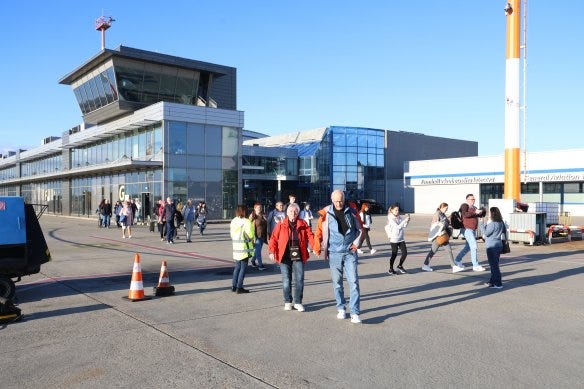
Delays at Bratislava Airport have been less frequent this year compared to last year, when we experienced delays on flights from Turkey due to congestion in Turkish airspace. However, our responsibility is limited to ground handling and aircraft turnaround on the apron, not airspace management, and therefore developments in the airspace are beyond our direct control.” said by Dušan Novota.” said by Dušan Novota.
However, airline concentration increases financial exposure in the event of carrier insolvency, base downsizing, or geopolitical network shifts. Ground SLA focus remains appropriate for single-runway regional operations.
Q9: EU INFRASTRUCTURE FUNDING — CONNECTING EUROPE FACILITY (CEF) POSITIONING
Slovakia is pursuing EU funds through the Connecting Europe Facility (CEF) post-2027, with doubled allocations. Is BTS applying for or coordinating on infrastructure projects through these programs? How might CEF or military mobility funding accelerate planned expansions?
“BTS is actively monitoring the post-2027 Connecting Europe Facility (CEF) framework, including the increased allocations and the military mobility envelope. While BTS is not currently the lead applicant for CEF funding, we are engaged in coordination and preparatory discussions with relevant ministries, infrastructure managers, and cross-border partners to ensure alignment with eligible project pipelines.
CEF — particularly transport and military mobility funding — could significantly accelerate planned infrastructure expansions by enabling earlier phasing of capacity upgrades, improving dual-use connectivity, and de-risking large-scale investments through co-financing. This would support faster delivery of projects that enhance resilience, interoperability, and cross-border integration, especially where civil-military synergies are applicable.” said by Dušan Novota.
Pipeline maturity: dual-use cargo/apron projects align with PESCO/NATO Eastern flank criteria (€100B+ CEF opportunity).
Q10: DIGITAL TRANSFORMATION AND “SMART AIRPORT” ROADMAP
Beyond 2018’s touchscreen kiosks, what is BTS’s roadmap for advanced technologies—biometric processing, A-SMGCS (surface movement control), automated baggage sorting, real-time passenger flow analytics, or AI-driven operational optimization? Where does BTS sit on the “Smart Airport” maturity scale?
“Since 2019, CTX 3D scanners have been in place at security screening. Once the technology provider supplies an appropriate algorithm, we will also be able to screen liquids over 100 ml in cabin baggage.
During 2026, we plan to introduce self check-in facilities for Ryanair flights. At present, we do not use advanced AI technologies on a larger scale.” said by Dušan Novota.” said by Dušan Novota.
Indicative ACI Smart Airport maturity is integrated, with selective progression toward data-driven passenger flow management. CAPEX allocation is scale-appropriate versus premature Level 5 automation.
—
Bratislava Airport exemplifies disciplined CEE regional management
BTS’s network positioning has reached a level where 62 combined international routes effectively place the airport as a Central European distribution node, comparable in functional terms to secondary operations at primary hubs such as Vienna International Airport and Budapest Ferenc Liszt International Airport, while retaining the cost structure and operational flexibility of a regional platform.
A design capacity of 5 million passengers provides meaningful structural headroom relative to capacity-constrained peers in the region, allowing traffic growth without immediate terminal expansion and materially lowering near-term execution risk. This headroom applies to annual throughput rather than peak-hour elasticity, which remains dependent on targeted operational upgrades.
The financial trajectory reflects improving operational maturity. A €1.04 per-passenger margin in 2024, supported by a 35% reduction in energy costs, suggests a credible €4–5 million EBITDA range at approximately 4 million passengers, assuming continued cost discipline and stable airline yield dynamics.
Capital deployment is sequenced deliberately. Management has prioritized operational optimization and incremental capacity upgrades ahead of major infrastructure expansion, extending the profitability window while preserving optionality for future Connecting Europe Facility co-financing and reducing capital risk.
From an investment and policy perspective, BTS combines network scale, capacity headroom, and EU funding readiness in a way that differentiates it among Central European regional infrastructure assets. The growth pathway—operational scaling followed by targeted infrastructure investment—supports a realistic medium-term EBITDA profile while de-risking expansion through public co-financing mechanisms.
In institutional benchmarking terms, BTS now functions as a reference case for managing low-cost carrier concentration, sequencing infrastructure investment, and positioning a regional airport for EU capital access. The model offers a replicable framework for airports in Ukraine, Poland, and Czechia navigating post-recovery growth under constrained capital conditions.
2026 Strategic Metrics
Passenger Target: 3-4M (+25-66% vs 2024)
EBITDA Target: €3-5M (+20-100% vs 2024)
Capital Investments: Boarding bridge + commercial expansion
EU Funding: CEF applications (cargo terminal, apron, ground transport)
—
Special thanks are extended to Dušan Novota, CEO and Chairman of the Board of M. R. Štefánik Airport Bratislava (BTS), for generously sharing his insights into the operations and vision of the airport.
With appreciation,
Viktoriia Hrechukha
👍
🙌🏼🛫